

Mark Swan
Qualifications, experience, and philosophy
My name is Mark Swan and I live in Lyme Regis with my wife and family.
My general education is as follows:
- 9 “O” levels
- 2 “A” levels in Physics and French
- Higher National Diploma in Building
After leaving school, earlier in my working life, I was fortunate enough to be trained by my father, himself a carpenter and joiner, who taught me to work with hand tools to make many wooden structures and furniture pieces. This formed the beginning of my love of the craft which has shaped a large part of my working life.
With experience in timber framed construction, in conversions of listed wooden barns and more recently in furniture making, about 15 years ago I became interested in two subjects related to woodworking.
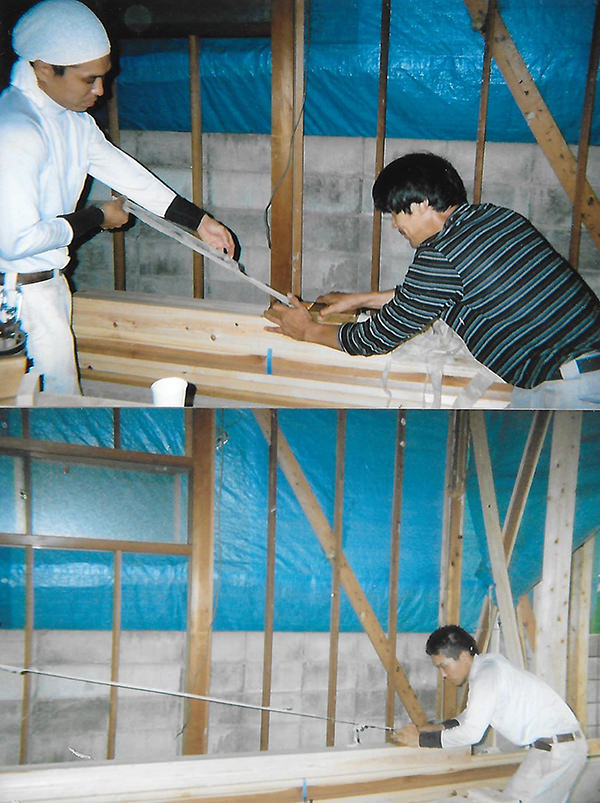
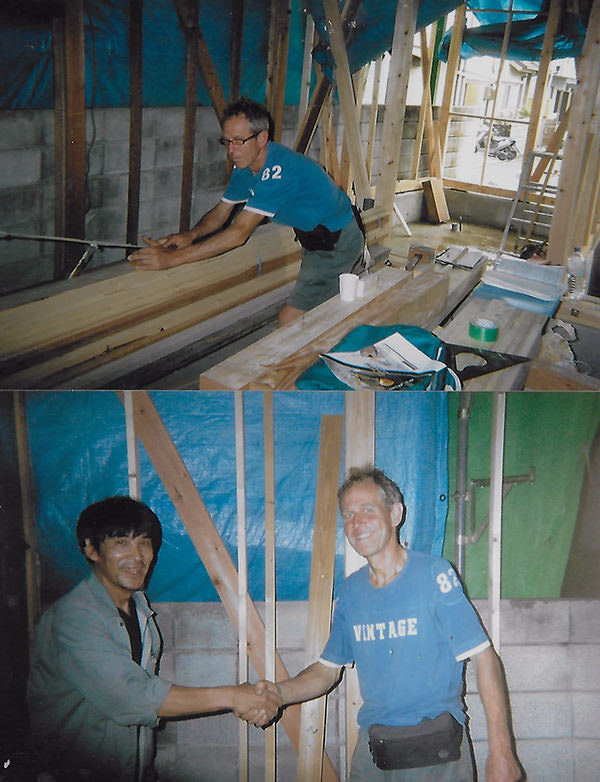
The first involved a study of Japanese carpentry and joinery and through a contact with the structural engineering department at Bath university, I was able to carry out an internship in Kyoto, working with hand tools with a Japanese master carpenter.
Reflecting on the Japanese ways of working with wood and their culture, I carried out further study of the traditional Japanese house, which has been instructive in understanding the factors which create a positive aesthetic response to the design of wooden structure generally. The presence of art and cultured living is evident in every aspect of this traditional dwelling of the common people in Japan, in which structure itself is decorative, an aspect which I aspire to in my carpentry work.
I do not seek merely to imitate traditional Japanese design in what I make, because to do so would lack respect for the formative forces behind it, but to explore, hopefully with other artists and designers, ways of integrating some of the guiding principles behind it into the clients own setting.
The second subject of interest was descriptive geometry, the technique of accurately representing “objects” by means of drawings and in so doing solving all problems related to their form and position. Traditionally this technique was used to set out and make complex 3-dimensional wooden structures and furniture.
The insight that I have gained from both studies has helped to increase my spatial awareness and design capabilities as a carpenter. I feel confident that this insight and my own practical experience can be applied to the collaborative design and making of an assembly of structural wooden members, no matter how complex.